
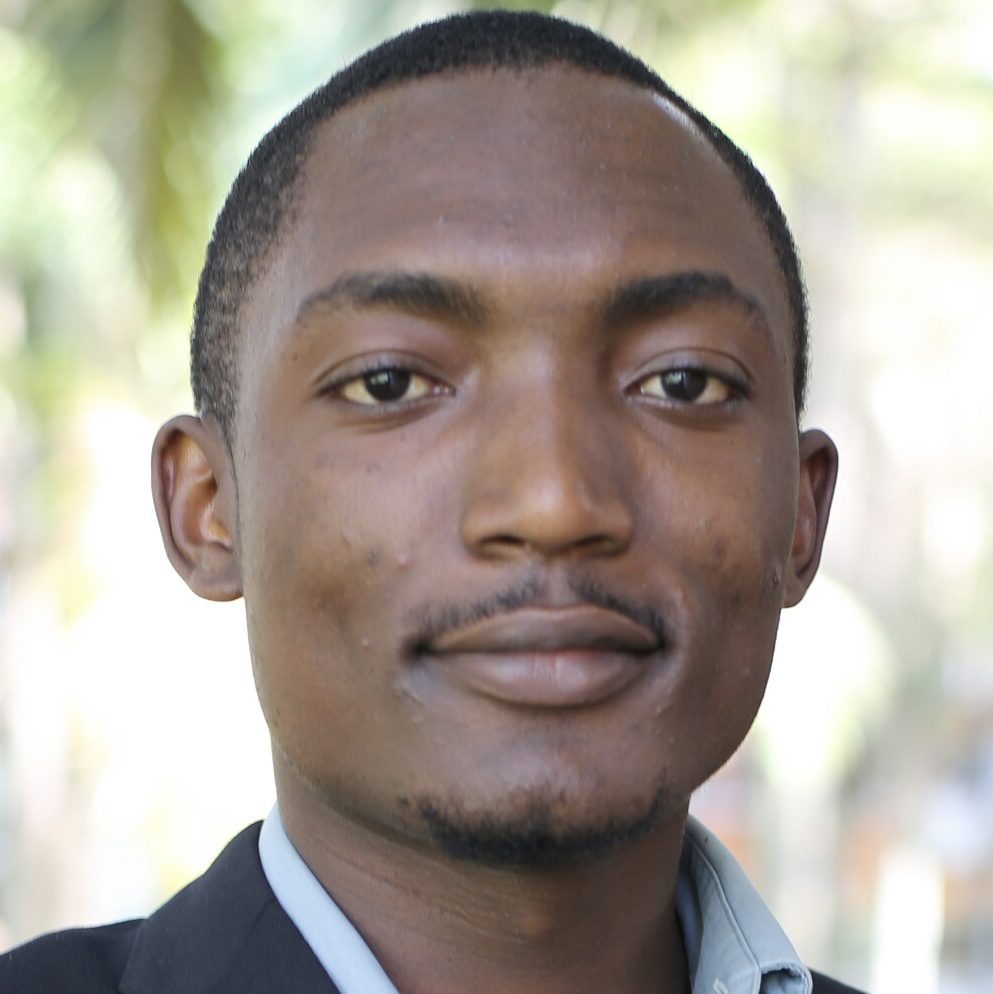
Using AI to Expand Access to Justice in Uganda


Matamba Abubaker, a lawyer and magistrate in rural Uganda, is using AI to expand access to justice. Serving a population of over 250,000 people—many unrepresented and unfamiliar with legal processes—Matamba shares how he uses AI as a support tool for writing judgments, conducting legal research, and reducing court backlogs. He also discusses his vision for an “Ask the Magistrate” AI assistant to help citizens prepare for court, navigate legal terminology, and reduce fear and confusion. In this episode of Kindrel Commons, Tim O’Connor and Dr. Adam Pah explore responsible AI use, the importance of cultural context, and how AI can democratize legal knowledge without replacing human judgment.
Episode 2: Matamba Abubaker – Using AI to Expand Access to Justice in Uganda
Tim O’Connor:
Well, hi everybody, and welcome back to Kindrel Commons, where we help take the mystery out of AI by showing you real people around the world and how they are using AI to help their lives be easier, better, and smarter. I’m Tim O’Connor and with me is my co-founder on Kindrel Commons. This guy really loves this topic.
He’s been involved in legal topics in the past and he’s gonna help us unpack this with our guests who we’ll introduce in a moment, but welcome Adam.
Adam Pah:
Thanks Tim, I’m really excited to be here. This topic is near and dear to my heart. I’ve spent the last seven years trying to bring AI into the legal space to understand what’s going on in courts but I’m really excited here to have our guest who’s been focusing on how do we make the courts more accessible to people as well as how do we make the courts more efficient with AI and he’s really an amazing person.
I am really lucky that I got to spend an entire summer working with him, but I’d like to introduce to you our guest Matamba. So Matamba is actually a magistrate in Uganda who I actually got to meet and work with over the summer as a part of a fellowship program as he’s trying to develop this Ask a Magistrate AI bot to help make the courts, but also just an understanding of the laws in Uganda accessible to people in remote areas and a lot of people are living in remote areas. I was shocked when he told me that in his own remote area of Uganda, there’s 200,000 people.
I mean, when we talk about remote areas in the United States, we usually joke about how there’s more cows than people and that’s not the case at all there. So there’s actually a really massive population that isn’t as involved or have as much understanding of this concept of what the legal apparatus is that’s coming out of the government, the major cities, but yet that’s affecting them on their everyday lives and he’s really working hard to bridge that and I honestly, it’s invigorating and it’s extremely commendable. And so I am just blown away by what he’s proposing and working towards and I’ll let Matamba actually say it himself in his own words, undoubtedly far more eloquently.
Tim O’Connor:
So we’d love to hear from you, Matamba.
Matamba Abubaker:
Okay, thank you for having me. It’s a privilege to be here too.
Tim O’Connor:
And could you tell people a little bit about your background so that they know who you are, what you do in Uganda as a magistrate?
Matamba Abubaker:
Yeah, thank you very much. So I’m a lawyer by training, and I’m an advocate of the High Court of Uganda and all courts of judicature. And for now, I serve in the judiciary as a magistrate grade one.
And when I was in the US, I noticed that magistrates in the US have some, there is a different jurisdiction than we do here. So as a magistrate in Uganda, he has both civil and criminal cases. There are only jurisdictional limits for criminal cases.
I can only hear cases whose punishment does not exceed 10 years imprisonment. And for civil cases, we measure the jurisdiction in terms of value and in US dollars, I would say, I think it’s about 10,000 US dollars, the value of cases that we can hear. I don’t know how significant that is in the US, but in my community here, that’s a whole lot of money.
So I head the Chibuku Magistrate’s Court. Uganda is divided into districts and so Chibuku is one of the districts. There are about 146 districts.
And as I shared with Adam, the district where my court is has a population of about 250,000 people. He was shocked because he’s a rural court. I was looking at a number that is less than that.
So on a daily basis, I hear cases, like I said, both in civil and criminal, but majority of the people who appear before me are not educated and not represented by lawyers. And so you sort of have to, we call it descending to the arena. As a judge, you have to descend to the arena and sort of act like a lawyer on both sides, which can present some difficulties because we use an adversarial system where ideally I should just sit back and then everything gets to me and I make the determination.
So that’s what sent me thinking and working to see that maybe I can do some work using technology to ensure that by the time people come to appear before me, they are prepared in terms of information, but they can also have some agency such that I don’t have to do the heavy lifting of being like a lawyer on either side.
Adam Pah:
And one of the things that you told me when we first met was just, what started this, was you were essentially holding office hours. Like you were taking time to just say, these are open hours, anyone can come and I’ll try to educate you about our legal system and how it works, what your rights are and what the potential remedies would be if you pursued this, right? So you were taking a lot of personal time to actually just- What did you do for counseling?
Matamba Abubaker:
Yeah, so I was saying that I figured that most of the questions people get to ask me on a daily basis are almost the same. It’s the same issues, same concerns, so I have to keep repeating myself. So I thought that using technology, a computer booth at court can help me deal with the frequently asked questions.
Then maybe I’ll have to only deal with the more difficult ones or those that arise out of those, but the frequently asked questions, we can automate them and have an AI chatbot that can address them.
Tim O’Connor:
So Matamba, that’s a wonderful idea to extend legal knowledge to folks who may not have that experience. I wonder, when you think about AI systems, they can reflect bias in the training data, right? So the training data in any open AI system is heavily based upon North America, secondarily Europe, but that’s only two parts of the world.
So how might this risk affect, let’s say, justice in Africa when safeguards would be, you’d want to have in place before the AI is used to any judicial decision-making, especially when I think about Uganda with language barriers in terms of different languages that are spoke or dialects?
Matamba Abubaker:
Yes, so that is really an issue. I’ve been using AI for about two years and I started off with the best, just using it to edit, like I could write a judgment and then I share it and ask, are there any issues? Are there any grammatical issues?
Because as a magistrate grade one, I don’t have the luxury of a research assistant. And so when I hear a case, I write the judgment and I deliver it, everything starts and ends with me. But as a writer, you know that sometimes when you write, you can actually make mistakes that you don’t see because when you’re reading, you read what is in your head rather than what is on the paper.
So many times I would go to court and while I’m delivering a judgment, I realized that I’ve made a grammatical error or I’ve interchanged the parties and yet a judgment is confidential. I may not easily share it with someone to prove free. And so that’s when I landed on AI, started with simpler tools like grammar, later on charged GPT, but just asking, you know, can I phrase this in an easier way?
Is there any spelling issue? Is there a grammatical issue? And then to flag the issues they are in and then I improve it and deliver it.
But now with the time, I also started using it as a research assistant, but that’s when what you described came in. I realized that many times, the AI tools would give me cases that don’t exist, you know, some sort of hallucination. You say a very nice case with a very good citation, but when you check the reliable sources, it is not there.
But then I realized that the data, like you’ve said, the data that has been used to train these systems is also largely from the West as we conceptually call it here. And so, for instance, in Uganda, in a criminal case, we don’t have a defendant. In the US, you have a criminal defendant.
We call such a person an accused person in Uganda. Now, some of those things, even just in language, you could read and see that, you know, the nature of the work, the output that the AI is giving is actually, when you read it, you can actually tell that this is not ours. But I realized that with time, as I sort of took on some, I think there are boats I’ve tried to train myself.
I trained them with my judgments. I trained them with our jurisprudence. I guide them to our websites because we also have significant bits of our legal material that has been uploaded online.
So with time, I can say over the past two years, the output has improved and it speaks more to the context here. So I think it’s a challenge, but there’s also an opportunity to do the training. So for instance, through this Ask the Magistrate chatbot or booth, already there’s research being carried out.
The biggest university here is Makerere University, and there is already a project where they are training AI tools in all our local languages. We have about 56 languages in Uganda. And so I think as a magistrate, since I’m at a station, leveraging on such a project, and there are also, well, as we have 56 languages, there’s a language like Rwanda, which is understood by majority Ugandans.
For instance, I don’t speak the language of Chimbuku where I work, but I speak Luganda and the majority of the court users understand Luganda. So Luganda is spoken by more than half of the Ugandan population. So once you have assistance in Luganda, it may not cover everyone, but it covers a significant part of the population.
And so for me, I look at it as a work in progress, that once we support it with the material, once we supervise what it’s delivering, once like for the frequently asked questions, the question is unknown and they are best. And there is someone maybe to say, if you have this kind of question, you can get an answer. If you have this kind of question, we may have to see the magistrate physically.
And then I can know that maybe we need to train it on this particular aspect. I think if we work like that, we can actually be able to leverage the advantages of the AI.
Adam Pah:
There were so many nuggets of wisdom. I just really wanna pull out just the journey and why that was so important is, I loved how you started with, there’s no one to check this with me. So I’m just gonna start small with, okay, let’s have a grammar check it.
Let’s have it help me with phrasings. And then once you developed that understanding, you then moved on to, okay, well now I’m gonna have it as a research assistant, but I know it’s not perfect. And you were skeptical, right?
You were actually like, well, wait a minute, this case sounds perfect, too perfect. Let me make sure it actually exists. And there’s been so many instances in the United States too of lawyers using Chat GPT as a research assistant, but doing no checking and just submitting this big case law as their reasoning.
And it’s like, it makes it look like it’s not a suitable tool, but it is actually really helpful if you build up and go on this learning journey of how to responsibly use it.
Matamba Abubaker:
Yes.
Adam Pah:
And I mean, do you feel comfortable now? I mean, do you think that you could distill that for others in a way, or is it really just all something everyone has to experience?
Matamba Abubaker:
Yeah, so I think one of the challenges we have had with AI, I find that many people approach it expecting perfection, which I don’t think is a good way. I think the better way to approach it is to know this is a tool that can support my work and it gets keeping better. And I have a role to play in helping it get better.
So I think some people approach it with, you say this is artificial intelligence, this is technology. So it’s actually like they are testing it. You see it, got it wrong.
You see it’s wrong, which I don’t think is the way. I think for me, the way I approach it is that this is a tool, it’s here, it will help me in my work. It has some issues.
I don’t look at it as replacing me. I’m a judicial officer, I’m the one who took oath. The work I’m going to put out, I’m the one who is going to sign it.
So it is me. So I sort of take the lead with this tool supporting me, but not putting it in the driving seat. Maybe we shall get there, but not yet.
That’s not how I look at it. So even when it gives me a case, and many times, by the way, those cases, the principles are correct. It is just the names or maybe the citations that are non-existent.
And so this can help me understand the principles and maybe explain them better. But then I have to do the work. I have to do my work of checking sources.
If I’ve received the case, does it exist? If I confirm it exists, well and good. If it does not, I remove it and I let it know that this case you gave me does not exist.
Of course, maybe I should also mention that I also had some concerns around privacy, because knowing that the information I’m sharing could be used to train the tool to better itself in the answers it may share with other people asking the same questions. And so aware of that, I had to learn how to make the settings, set it up in a way that some of the information I share is not available to train it or is protected. And then also, I also got to learn that actually, you can have a chat with it and say, this particular piece of information, I do not want it out there.
And then also sometimes, just avoid putting some information there. If I know the information is too confidential, like for our case, there are cases we may handle involving minors, involving victims of say sexual violence, and you do not want that information to be easily searched by everyone. And so I could even put the case there, but I use initials, I don’t put the actual names there.
So for me, it’s just understanding that this is a tool that can ease my work, it does not replace me. And I just have to be careful with the information, I have to cross-check the information I get out of it. And also have to be careful what I share with it in terms of the settings and also explicitly, sometimes telling it how I want it to support me.
Tim O’Connor:
So you’ve talked about how you’re using AI in your role as a magistrate, but then the citizens, if you will, when they’re coming to court and they’re making their case to you, they’re gonna start to get familiar with AI. So how do you see courts having to determine what’s real or admissible in court as people start to be able to use AI on their side of the equation?
Matamba Abubaker:
Yeah, thank you. So first of all, I think AI, especially for an environment like the one I work in, could be helpful in enabling people prepare for court. Like I say, majority of the people who appear before me are not represented and that makes my work difficult.
But it could help if these people had some support because sometimes it’s just the basics, you’re having a land case and maybe there are some documents that someone needs to carry. There are some basics about the court, who are the parties, actually what is your case, can you be able to explain it? Then there are some of these words we use in court, like a claim, issues, a reply, an affidavit, some of those words.
So I have to struggle to explain almost each and everything at every point. Yet, if some of these people had an opportunity to interact with a tool, and then some of those obvious and easy or basic things I explained to them, that would do. First of all, we’re also dealing with trauma, that’s another whole discussion, another dimension of the Ask the Magistrate initiative here about the trauma that people carry to court.
Many people come to court when they are afraid, they are scared because of the consequences of making mistakes. But part of what can reduce their anxiety is just having some information, knowing that I know the best things, I’ve come with the right documents, I may be asked ABC. So I think AI, these are useful tools that the court users should embrace and use.
But then that also presents a challenge, like you do note that sometimes, imagine someone presenting submissions that have cases that are non-existent. I imagine someone taking AI, and then, like I said, we don’t have a criminal defendant in Uganda. And then maybe because the tool they’re interacting with is Eurocentric, and then they come with a terminology that is not usable in our jurisdiction.
How do we guard against that? I’m not sure that there’s a sure proof way of doing so, but on my end, I’ve just been doing the same thing. Submissions that have been filed, I’ll take the time to check the cases.
Do these cases actually exist? And even in our setting, I have found, we have had cases of lawyers, ours are not as popular to break the internet, but I’ve also had cases where the lawyers have cited non-existent cases. And previously, you know, AI also keeps getting better.
Previously, there are certain things you would look at, you know, you would look at the perfection, you would look at the language, the diction that is used. But right now, recently, as part of the training I was receiving for use of AI, they were showing us how some people actually ask that AI make some mistakes. So uses some language that could give you an impression that it’s actually a person.
So it keeps getting more difficult to detect. But I think that for us in the judicial system, there are some basic things. So if it’s a precedent, and you’re making a decision based on a precedent, does the precedent exist?
If there is a section of a statute, does that section exist? So I think there are major things that we have to look out for. And for the legal system, for us, usually it is mostly the precedents, the authorities, the lawyer citing, does it exist?
The rest is just language. It’s just making a case. And the better you can express yourself, the better for you and your case.
So I think that for me, and then of course there’s also the element of evidence that someone can generate photographs or a video. I think that we might have to make use of other AI checkers. You know, the beauty with technology is usually that when it presents a challenge, there are also people thinking with a solution.
So just as we have plagiarism checkers, plagiarism AI checkers, I think that we may also have to adopt checkers to check photographs, to check videos, because as we know now, you may not be able to tell just by looking at it. Some can produce evidence that is near perfect. So at that level, within our human capacities may be difficult, but I think we might have to adopt counter softwares that can enable us to check.
Other than that, for now, especially for my context, the most important thing are the authorities, cross-checking, does this law exist? Does this case exist? And you’re good.
When we get to the more sophisticated bits of evidence, then I think we shall still have to run to technology for ourselves.
Adam Pah:
I love how you just balanced, right? That with the tool, there’s positives and negatives, right? There’s the negatives of, it could manufacture things that you’re gonna have to worry about in the future, manufacture evidence, there’s the case parts you have to check, but there’s these positives of democratizing access and understanding.
And that’s, I think, a really important thing to point out is in Uganda, you have both the English common law system, but then you also have customary law. And so it’s this mixture of the two and the English common law system doesn’t necessarily match the way law or, yeah, I mean, the law worked in rural areas before. Yes.
Tim O’Connor:
So Matamba, you spoke about the photographs as an example. That’s really intriguing to me because most people will never be in a courthouse in their lifetime. And their experience to courthouses will tend to be through media, like a movie as an example.
And I can just see this example of a movie where the lawyer picks up a picture or whatnot and says, here’s this evidence we’re entering. Can you expand a little bit more on that one? Because that’s really fascinating because in the past, I’ve never seen a movie where they said, well, how do we know that that picture is true, right?
But now that question is gonna come up. I mean, do you have any thoughts on that?
Matamba Abubaker:
Because I’m really intrigued by that because- So traditionally, what we do in our system here, we call them exhibits. Traditionally, what we rely on to check the credibility is first of all, for instance, if it is a photograph, then we want to know who took the photograph, what gadget did they use, what software did you use to move it maybe from a camera to a computer and to print it or to a CD that then you’re presenting in court. And so the court will be keen on that trail.
And then usually we insist that the person who took the photographs is the one who comes to court to take oath and speak to it. So traditionally, we would rely on the elements of the oath and then being able to track the time, the person who took it, the gadgets that were used, the software that was used. So in the movies, they don’t go into all those details, but in a real court, we actually look into those.
But then there’s another thing about courts. Many jurisdictions around the world are adversarial. So as courts, we also rely on the fact that you have an adversary who is going to check you.
So usually your adversary will also have the burden and the duty to check what you’re offering, whether or not it was taken. Yeah, so it’s in that you versus the other one. It’s in that tension that the court is usually able to find the truth.
But if this is presented and you don’t challenge it, then it’s likely to be taken on. But now with the technology, that becomes a little complex because if the person presenting it is lying on oath that they took the photograph and the photograph has been able to be created in a way that it can bias you when you watch the video, you see the photograph, then it becomes difficult. But I think still we can rely on the good old system of you having an adversary.
So the lawyer on the other side, the person on the other side, if they know for sure that the photograph you’re presenting is not real, then they will go back to link through processes like cross-examination or even asking the court to go through certain processes of proving or disproving whatever you’re presenting. So traditionally, that’s how we approach it. And I think that is still where we are.
But where it is difficult, like I said earlier, I think we have to take recourse to technology.
Tim O’Connor:
It’s really fascinating as you speak about this and how fast AI is moving. What kind of judicial education do you think is most urgent for judges like yourself and lawyers to be trained to understand the AI implications of like evidence, contracts, rights, and so on?
Matamba Abubaker:
I also happen to be a part-time lecturer, law lecturer at the Islamic University in Uganda. And so I will approach your question like an educationist. And I should say for Uganda, we do not yet have any course units or any trainings that we are giving the law students in technology.
In fact, even things like cyber law, there are also concerns around copyright. If something’s generated by AI, who owns it? Is it the AI company?
Is it the person who prompts it? Is it, of course, there have also been claims about AI using other people’s work to generate this. Is it the original or the artists who have millions or billions of work on the internet and from the data that the AI is trained on?
Unfortunately for Uganda, I don’t know how far in the US people might have moved, but in Uganda, there is nothing being offered yet. But I think we have a duty as scholars to provide the material that can prepare legal practitioners, both as judicial officers, but even the lawyers for using these tools to ease their work. But more than that, also being able to guard against the negative elements of the same.
And for some areas, we do not have the law yet. I was very excited to see driverless cars in Atlanta, Georgia, but I had a discussion with some of the fellows and we are wondering if that car causes an accident, we can’t rely on the old system of credits on someone’s driving permit. So what do we do?
Do we find the company? Do we find the AI agent? Whom do we deal with?
Now, there are some of those new questions that honestly do not have answers, but I think the work is cut out for us as scholars to put out some work, but to also introduce curricula that can enable legal practitioners prepare for these new age challenges.
Adam Pah:
I just wanted to add with that last statement. I mean, the issues that he’s presenting, it’s global, right? The driverless cars here.
I mean, we don’t have enough education or case law or precedent pretty much anywhere about how these issues should be dealt with. It’s all something that we’re actively trying to understand and work out this new framework for because it really, it is software, but the old laws of software where you can’t sue Microsoft if a blue screen of death loses your term paper or brings down your company’s database, it doesn’t really apply when it’s a car that drives into a light pole on its own. And we need to work this out.
And it’s a difficult situation when trying to figure out, well, the old schema of how we dealt with this doesn’t really necessarily apply so well in this new framework or in this new world that we’re embarking on. I agree, absolutely.
Tim O’Connor:
Well, this has been a wonderful conversation. Let’s go to our closing area where we like to cover three topics. The first is what you would tell another person.
The second thing is what would you do right now? And the third is how you would actually introduce this to another person. So let me start with you, Matamba, with a question about, so you have a bunch of, let’s say, young lawyers in a room and you mentioned you’re an educator as well.
So what would you tell them to do to get better, more knowledgeable, et cetera, in using of AI in the legal system?
Matamba Abubaker:
Yeah, I would tell them there’s a lot of fear-mongering around technology. And what we don’t understand as human beings, we usually fear and it’s justified. And technology usually disrupts.
So the disruption is here, but I don’t think the solution is for us to shy away from it. I think that we have to tool ourselves, retool ourselves, train ourselves on how to use it. Only then shall we be able to also maybe learn how to guard against the negative aspects.
So I think that AI is here. It can ease our work. I’ve used it for the last two years.
It also has its own challenges, but we are better off learning it and using it rather than hiding away from it. The fear that AI will take our jobs, I think should be more if we don’t take time to learn it. I think the first people who lose jobs are those who cannot leverage these technologies.
So there’s no shortcut. Go out there and train yourself. And there’s a lot of material.
Even the AI itself can actually train you. Yeah, so, and there’s not only one AI. There’s a common AI here that I may not mention, but there are many tools.
So just go out there and explore.
Tim O’Connor:
Well, that’s wonderful. Let me switch over to you, Adam, then on the second part of it, which is like something to do right now.
Adam Pah:
There’s one nugget of Matamba’s journey that I just don’t want to get lost. And I want everyone to really appreciate and take in for themselves is how he’s using AI as an effort multiplier. He, every one of us has 24 hours in the day and he spent the time learning how to use this tool to multiply his efforts so that it doesn’t take him as long and really so that he can then take that time and use it to produce good for his community.
And to really think about how can I take this tool and use it to multiply my effort to produce a greater good for those around me. Whether that’s through just freeing up your time or figuring out how to use an AI to make yourself more available without being physically present. And that is really powerful.
Matamba Abubaker:
One of the biggest issues we have in Uganda is case backlog. And I want to report that my court is one of the few in Uganda that has no case backlog. That means we have no case that is older than two years.
So in Uganda, we have cases that go as back as 1990, 2000, but I do not have any case backlog. And there are many reasons for that, like promoting alternative dispute resolution and all that. But that has also been possible because I’ve been able to leverage AI to do some basic tasks.
Like in the judgments, there’s a part where you summarize facts. Now, I don’t have to sweat that. So that has enabled me to be able to deliver several judgments in a week or two or a month that would be difficult for me to do applying myself as a human being only.
Tim O’Connor:
So the way to continue to grow the knowledge of this is to not only use it yourself, but it’s to also show another person what you’re doing. So can you lead or end with a story about how you’ve helped another person?
Matamba Abubaker:
Okay, yeah. I think so. I have tried to enlist some colleagues, colleague magistrates in Uganda to use this technology, but I think through the Ask the Magistrate app, we are going to be able to do that a bit more.
So the project is still in the earlier stages. We are first piloting it with my court. But I think the vision of the project is to have these booths deployed in all the hard-to-reach courts in Uganda.
So there are 39 courts in Uganda described as hard-to-reach. Hard-to-reach means literally, I mean, even by road, by network, by everything. So these are courts where there are no law firms, no legal aid support.
So my vision is to see how we can leverage this such that it goes beyond my court in Chukuku, such that we can have it in all these hard-to-reach courts where the booth can serve as a legal aid clinic. And then progressively, we can also train the officers in these courts to leverage AI such that they can free up time to adopt, for example, offering that legal aid like we do at Chukuku Magistrates Court. So I think it still speaks to the multiplying of effort, but it also speaks to the fact that it’s not only my court that should be case backlog-free.
We need to send this to all the courts. And my mission for now is on the hardest-to-reach courts in Uganda.
Tim O’Connor:
Wow, I’m just sitting here astonished in a very happy way hearing about what you’re doing, Matamba, in Uganda, because let me tell you what, what you’re doing not only can be applied more in your own country, in your own courts, but globally. I mean, what we’re trying to do here with Kindrel Commons is to actually show people around the world, people around the world who are doing really interesting things, and you’ve really inspired me a great deal. So let me first say to you, Matamba, thank you so much for your time today.
It’s really a pleasure to hear you, hear your story and what you’re doing. So I want to thank you on behalf of Adam and myself.
Matamba Abubaker:
The pleasure is all mine. Thank you for the platform. I hope that it’s able to help, like you say, people around the world make life easier.
Tim O’Connor:
Well, Adam, there we go again. Another wonderful interview. People around the world who are using AI, thank you so much for all your time and contributions, my friend.
Adam Pah:
Well, thank you both. I hope everyone feels similarly inspired from this conversation.
Tim O’Connor:
Well, everybody, thanks. And I’m going to use the word, our friends. Thanks for joining us here, because our intent here at Kindrel Commons is to help everyone take the mystery out of AI because we believe AI is for everyone.
We’re so glad you can join us. We hope that you learned some things here and we just look forward to having you join us again on a future edition of Kindrel Commons. All the best.